

We reported last week that British Columbia will implement a carbon tax of $10 per metric ton of carbon on July 1, rising in $5/tonne annual increments to reach $30 in 2012.
In both scope and size, the tax leapfrogs North America’s other, modest carbon taxes, in Quebec and the City of Boulder, Colorado. How did the tax come about? CTC supporter Jurgen Hissen filed this account from Vancouver.
The idea for a carbon tax came from the top ranks of the BC government. It wasn’t foisted upon them. I think they were actively seeking ways to justify it to the citizenry.
BC Liberals — who aren’t connected to Canada’s national Liberal Party — have always been pro small-government. When they came into office in 2001, they cut taxes and government spending extensively. BC Liberals have also historically emphasized personal responsibility and environmental issues, and a carbon tax (a consumption tax) is pretty consistent with that.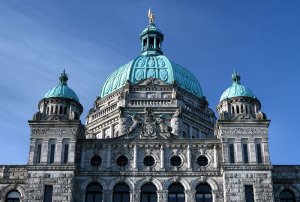
After meeting last year with California Governor Arnold Schwarzenegger, BC Premier Gordon Campbell resolved to set carbon reduction targets for BC. Suggestions of a carbon tax began circulating, but the real push likely came from Carole Taylor, Campbell’s finance minister.
In late 2007, Taylor assembled a committee, the Select Standing Committee on Finance and Government Services, to collect public input on the budget. The committee issued a questionnaire to every household in the province; how to tackle climate change covered three of the six questions, and two of them were what pollsters would call “leading”:
The Province currently provides tax incentives to encourage the purchase of hybrid vehicles [… etc.]. What tax changes would you make to encourage environmentally responsible choices? and
What tax changes would you make to discourage British Columbians from activities that contribute to greenhouse gas emissions?
Clearly, the government was looking to rationalize carbon taxes. The response was favorable, and crucial, not to mention broad-based. A carbon tax was backed by business leaders, a group of 60 economists from BC universities, and key religious leaders.
Taylor, the finance minister, reported getting 700 letters in support of a carbon tax (about 10 of those were mine, I think), and only about 160 opposed — a fact she cited on the day she announced the tax.
CTC invites readers from British Columbia or elsewhere to write with further details/insights on the development of BC’s carbon tax as well as potential implications for other provinces and the U.S.
Photo: Wikipedia
bcGASsaver says
I am a resident of British Columbia and will be impacted by this carbon tax. Luckily my family has been trying to reduce our fossil fuel use for some years, so it will be to our monetary benefit. There has been a lot of complaining that this tax will unfairly hit people in rural areas and northern BC (cold winters). As far as I can see that won’t be the case – it will hit the people who refuse to find any way to reduce their fuel use, regardless of where they live. The tax is pretty minimal so it doesn’t take much to save. If you are reading this and want to rip my head off and call me a stupid eco city-dwelling bike-riding idiot who doesn’t know #*&@-all about living in the country, here’s a quick list of what I did to save fuel when I lived in a rural area; pick one, and you’ve saved your tax and done your bit for the environment:insulate your house better, trade in your vehicle for a smaller one (yes, you can drive a car on logging roads and in winter), reduce your trips into town by 1 every 2 weeks by being more organized with your shopping, start a commuter van with your buddies, when your hot water tank dies replace it with a better one, burn wood for heat. I can think of more, but you get the point.I’m no Liberal supporter, but I admire them for going out and doing this and I hope it starts a trend in other provinces and the States.
L. David Roper says
You need to change the name of the web site to Carbon Fee Center NOT Carbon TAX Center. Frame the issue! Just as one has to pay a fee for dumping trash in a landfill, one should have to pay a fee for discharging pollutants into the atmosphere. And, if one dumps trash on the side of the road, one pays a fine when caught.Dave Roper
Barry Freed says
Sure, charge me a carbon tax for my oil hear. My landlord, even though I “educated” him on the tax credit he could get by adding some insulation to the walls (it has none) and replacing the 1940s leaky single pane glass windows and putting in a wood stove, he is so cheap he will not do it.
I wanted to add an insulating jacket to the water heater, he will not pay for it
So I call BC Hydro, they stopped supplying them, and I cannot afford one myself.
These programs sound all nice, but not for me, it has only made me dis-illusioned with it ALL
I can’t do anything about it, other than putting bubble wrap on my windows, caulking and weatherstipping all I can at MY OWN EXPENSE. I will never see the payback on what I laid out, never.
BUT GORDO is going to be all progressive and charge me an escalating carbon tax on my heating fuel. Glad it makes him feel so good and the other bourgeios art schoolers on this site
So I am stuck paying this UNFAIR tax. IT STINKS
Why not make Harmac, the pulp mill, in my neighbourhood pay carbon tax? They pay NOTHING as they burn hogg fuel (wood chips and left over tree bark) and they emit millions of tons a year, they pay NOTHING and I pay $300+ a year carbon friggin tax to make Gordo feel good.
NOT FAIR!
Charles Komanoff says
Barry —
Your situation is frustrating, indeed. It’s also fairly unusual, though not unheard of, in the states, where landlords typically pay for heat, and thus have an economic incentive to become energy-efficient which your landlord does not.
So yes, it’s frustrating to be caught in that kind of bind. Yet presumably that was the situation when you signed the lease and moved in. I wonder what you were thinking at that time, when you observed the lack of insulation, the single-pane windows, etc., and understood that you, not the landlord, would be paying for heat. Did you try to negotiate improvements in heating efficiency and comfort then, when you might have had some leverage? Could you do so when the lease comes up for renewal?
I don’t have the precise numbers handy, but I’ll venture that the BC carbon tax, now in its second fiscal year, is adding less than 10% to your heating oil costs. It’s also making petrol and jet fuel cost more, but if you use less than the average, you might be coming out ahead — or at least cutting your losses on the fuel oil — via the tax shift. It’s not clear ot me if you’ve reflected the tax shift in your $300 figure.
I take it that your name is a tribute to the late Abbie Hoffman? I like to think that if he were around today, Abbie would be cheering on carbon taxes as a way of sticking it to the wealthy. While your landlord situation is indeed a drag, maybe it’s time for you to change it?
Sincerely,
Charles Komanoff
co-director, Carbon Tax Center